"What concerns me is that there is no
'Oversight'
from our elected officials on anything associated with our government
possessing or working on craft that we believe are not from this
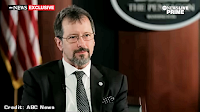
world"–Retired Navy Cmdr. David Fravor
|
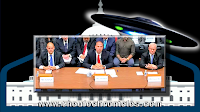
WASHINGTON—The Subcommittee on National Security,
the Border, and Foreign Affairs held a hearing titled, “Unidentified
Anomalous Phenomena: Implications in National Security, Public Safety,
and Government Transparency.” Subcommittee members
|
|
discussed with witnesses the lack transparency and proper reporting mechanisms
within federal agencies for air crew to report Unidentified Anomalous Phenomena
(UAP) interactions. Subcommittee members also discussed how pilots who report
UAP encounters have faced harsh retaliation both professionally and personally,
leading to a lack of desire to report UAP encounters and creating gaps in
national security intelligence gathering.
Key Takeaways:
Federal agencies have poor or non-functioning internal reporting processes
for military and commercial air pilots who encounter UAP. This has led to a
lack of transparency, which has fueled speculation and eroded public
trust.
• Ryan Graves— Executive Director for Americans for Safe Aerospace—testified
on the ramifications that a lack of transparency can bring on the topic of
UAP:
“The government knows more about UAP than shared publicly, and excessive
classification practices keep crucial information hidden. There’s a lack of
transparency around UAP that’s unsettling. Since 2021, all UAP videos are
classified as secret or above. This level of secrecy not only impedes our
understanding but fuels speculation and mistrust.”
Commercial and military pilots who have reported UAP encounters have faced
severe retaliation, damaging their professional careers and personal lives
which has led to a chilling effect of pilots reporting interactions with
UAP.
• David Grusch— Former National Reconnaissance Officer Representative,
Unidentified Anomalous Phenomena Task Force at the Department of
Defense—testified on the retaliation he has faced from reporting on UAPs:
“It was very brutal and very unfortunate some of the tactics they used to
hurt me both professionally and personally to be quite frank…there were
certain colleagues of mine who were brutally administratively attacked and
it actually makes me very upset.”
Subcommittee on National Security, the Border, and Foreign Affairs Chairman
Rep. Glenn Grothman (R-Wis.) examined the lack of training and internal
reporting systems for military service members and commercial pilots to report
and assess UAP information.
Rep. Grothman:
“Do feel adequately trained and briefed on how to handle encounters with
UAPs?”
Mr. Graves:
“No. Right now military witnesses to UAP have limited options for reporting
UAP. But more concerning is that the commercial airline aviation sector has
not adapted to the lessons that the military has implemented. The military
and DOD have stated that UAP represent a critical aviation safety risk, we
have not seen that same language used being used in the commercial markets.
They are not acknowledging this risk.”
Rep. Grothman:
“What steps do you think need to be taken to improve pilots’ UAP
reporting?”
Mr. Graves:
“Right now we need a system where pilots can report without fear of losing
their jobs. There is a fear that the stigma of being associated with this
topic is going to lead to professional repercussions, either through
management or perhaps through merely physical check. Having a secure system
and reducing the stigma, and making this information available to the public
is going to reduce the concerns that air crew have.”
Rep. Tim Burchett (R-Tenn.) discussed how the DOD spends massive sums of
taxpayer dollars while continuously failing audits yet refuses to share UAP
findings with the public.
Rep. Burchett:
“We audit the Pentagon every year and I’ve been here five years and they
failed the damn thing every year. They lose over a billion dollars a year,
we think, and I’ve been the Department of Defense maybe 60% of their assets
are unaccounted for or whatever the heck that means. In the public sector
you go to jail for that kind of crap.”
Rep. Anna Paulina Luna (R-Fla.) highlighted how the stigma around UAPs has
caused pilots who report their encounters to experience draconian consequences
from officials within U.S. National Security space.
Rep. Luna:
“In the last couple of years, have you had incidences that have caused you
to be in fear for your life for addressing these issues?”
Mr. Grusch: “Yes, personally.”
Rep. Luna:
“I just want everyone to know not that he’s coming forward in fear of his
life to put in perspective if there were really not scared about this
information, why would someone be intimidated like that?”
Rep. Nancy Mace (R-S.C.) discussed the significant levels of underreporting of
UAP due to pilots being fearful of retaliation, leading to a loss of
potentially valuable national security intelligence gathering.
Rep. Mace:
“What percentage of UAP sightings in your belief go unreported by our
pilots?”
Mr. Graves:
“This is an approximation based off of my personal experience speaking with a
number of pilots, but I would estimate we are somewhere near five percent
reported.”
Rep. Mace: “So 95 percent basically don’t report seeing UAP?”
Mr. Graves: “That’s my personal estimate.”