By Andrew Chung
TheStar.com
3-23-08
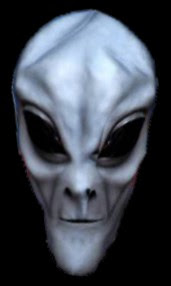
Creatures will look weird all right, say experts who have imagined some for a new exhibit. But inside they could turn out to be surprisingly like us
If the prototypical alien is the gruesome monster that a crew of highly unfortunate humans found in a remote space outpost in the film Aliens, with Sigourney Weaver, you might say our future seems bleak.
The aliens in that film – actually a series that began with Alien in 1979 – are terrifying and bloodthirsty, salivating from their two sets of jaws, bent solely on turning human bodies into wombs from which baby aliens violently burst.
But come on, just how realistic – biologically speaking – is an alien whose blood is acidic enough to eat through several decks of a spaceship?
Or what about the Martians in H.G. Wells's The War of the Worlds, hideous blobs with Gorgon-like tentacles descending from their quivering mouths, pipetting victims' blood into their own veins?
Or, for that matter, the blob in the Steve McQueen movie of the same name?
There has been no shortage of alien depictions in literature, comic books and film.
But now scientists are putting some extra thought into the idea of aliens. They've come up with some interesting results.
An exhibition, set to open April 10 at the Montreal Science Centre, intends to add scientific rigour to a subject heretofore solely the domain of human imagination.
Using the expertise of a number of renowned scientists, the exhibition presents ideas on what aliens might look like, taking into consideration biology, astronomy, and the laws of physics and chemistry.
"It's fiction, yes, but it's science-based science fiction," says Louise Julie Bertrand, the head of exhibitions at the Centre. Such an exercise, she adds, will appeal to both kids and adults. "People are often attracted to the bizarre and intriguing and weird."
The stars of the exhibition are these alien forms envisioned by the scientists to fit the specific characteristics of two "planets," such as carbon content, the temperature, the type of atmosphere.
"It was a real attempt to come up with creatures, that, although fanciful, are plausible," says Michael Meyer, an astrobiologist and the lead scientist for NASA's Mars Exploration Program.
The exhibit opens with depictions that authors and filmmakers have dreamed up. A common theme is how aliens are viewed as the other, just as witches – and even Communists – have been.
"Through the ages, they have always been something we feared," Bertrand says. "Dragons, witches, aliens, this is a recurring (theme) through history. The stranger, the person different from us, this is who we'll focus our fears on."
In this zone of the exhibition, there is, yes, a life-size model of the alien queen from Aliens, but then it's on to the science.
It seems natural that the next exhibits would include examples of creatures that live on our own Earth, such as the creepy sea spider and the deep-water fang-toothed fish. It's easy to see how hideous creatures like these might inspire Hollywood's alien-creators.
Real forms of life that exist on Earth in extreme environments – under extreme pressure at the bottom of the ocean, or in extremely high temperatures, or acidic conditions – offer clues to the real forms that alien life might take.
A few years ago, for example, scientists discovered a single-celled organism at a volcanic vent two kilometres under the sea, at 121 degrees C. At those depths, they need no sunlight. Researchers suggest they could survive on a planet that is habitually dark.
The two "planets" that the scientists came up with – canvases, really – are both similar to and different from Earth. And on these canvases they drew the creatures that inhabit them.
The planets are about the same size as Earth, says Simon Conway Morris, a Cambridge evolutionary biologist who took a lead role in the exhibition, first presented in London, England, in 2006. Had they been bigger, the pull of gravity would be too strong for anything to move with any vigour.
"Aurelia" supports life even though the star it orbits is much cooler than our sun. It does so by orbiting very closely, so close that the star's gravitational pull prevents Aurelia from spinning. One-half of the planet is always dark, the other always day.
The top predator on Aurelia is the bipedal gulphog, which has a long neck and a claw-like beak, and stands 4.5 metres tall. It might feed on six-legged mudpods that scurry on the ground, hide in burrows, and swim like crocodiles. There are also stinger fans, which look like plants but are actually animals that use tentacles to capture a weak star's energy.
"Blue Moon" is more like Earth, but with much more oxygen and carbon dioxide in the atmosphere, allowing both plants and animals to grow bigger than on Earth. The air is extremely dense, allowing all sorts of animals to fly, such as so-called skywhales, which have nine-metre wingspans and fly using echolocation. They hover above thick "pagoda" forests, which stand at an astonishing 1,000 metres.
There are distinct similarities to creatures on Earth. Conway Morris says that's no mistake. "My constraint," he explains, "is that I seem to think that life could only evolve in a number of limited directions."
He's talking about "convergent evolution," whereby similar physical attributes evolve from completely unrelated ancestors.
"From different starting points, you end up with very similar biological solutions," he says. The eye, for instance, is found in all sorts of unrelated creatures. The octopus and the human have each developed an eye that's similar in construction.
"What I find so fantastic, if we did meet an alien, we might first (express disgust). But those differences would turn out to be skin deep. While they might look quite different, in the details of its organization, we'd be impressed by terrestrial similarities."
The scientists believe that extraterrestrials would also be subject to the laws of evolution that have shaped life on this planet.
"If you don't have evolution, you're not going to get from a simple replicating thing to bacteria to complex life," says NASA's Meyer. "I can't think of another way."
Other assumptions were made, such as the fact both Aurelia and Blue Moon have oxygen to support life. "There is reasonable scientific speculation that you need oxygen to get complex life forms because the energy-usage rate is so much higher to maintain different kinds of cells working in cooperation," Meyer says.
He notes that we didn't have an aerobic world until 2.8 billion years ago, roughly the time we began getting more complex organisms.
As scientific as these researchers' approach was, it doesn't deny some of the more Hollywood versions their due.
Take that horrific alien queen with the acid blood. Neither Meyer nor Conway Morris discount the possibility. Here on Earth, they point out, the African bombardier beetle can spray boiling hydrogen peroxide at enemies.
The final zone of the exhibition looks at our attempts to communicate with aliens, largely through the Search for Extraterrestrial Intelligence (or SETI) project, listening to radio waves, hoping for contact. (So far, nothing.)
There is no hint at positing the existence of "intelligent" life out there, just the existence of something.
Meyer's bet is based on simple math: "There are 100 billion stars in our galaxy. And there are 100 billion galaxies," he says. "That's a pretty large number – so there's got to be something out there."
For others with ideas grounded less in science and more in imagination – even those without conspiracy theories about UFO abductions and alien invasions – the bet is probably based more on hope.
Hence all the books and films: The idea that we're completely alone in the universe is apparently too difficult to accept.


