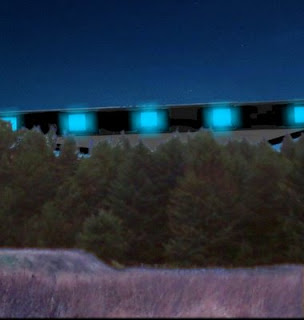
| Scientists of The People's Republic of China (PRC) and the Soviet Far East have begun a joint study of UFOs. The first meeting of Ufologists of the two countries has ended in the small maritime | CIA Communique May, 1990 |
a UFO, UAP News aggregator, featuring both current and historic reports, articles, sightings, interviews, and videos
Pages
- AARO
- AATIP
- Aliens
- Abductions
- CIA
- Chronicles
- Congress
- Crashes
- Documentaries
- DoD
- Flying Discs
- Flying Saucers
- Hoaxes
- IFOs
- Interviews
- MUFON
- My UFO Experience
- NASA
- Nimitz UFO Incident
- Orbs
- Pentagon UFO Program
- Photos
- Project Blue Book
- Project Grudge
- Radio
- Reader Reports
- Reports
- Roswell
- Secret UFO Files
- UAP
- UFOs
- UFOs & Nukes
- Videos
Showing posts with label Study. Show all posts
Wednesday, August 30, 2017
Soviet and Chinese Scientists Join Forces in UFO Study | UFO CHRONICLE – 1990
Labels:
1990
,
China
,
CIA
,
Dalnegorsk
,
Document
,
Documents
,
Investigation
,
Joint Study
,
PRC
,
Russia
,
Scientists
,
Soviet Union
,
Study
,
UFO
,
UFO Study
,
UFOs
,
USSR
Tuesday, August 18, 2015
Bears React to UFOs?
Reactions on the ground to UFOs moving overhead have been reported for centuries ranging from people saying they were transfixed during the encounter to some running for cover.
Researchers reporting in the professional journal, Current Biology, tracked a bear’s reaction to UFOs after limited studies indicated most bears simply ignored anything flying overhead.
The UFO was an unmanned aerial vehicle (UAV) equipped with video to capture the bear’s apparent reaction. But the free roaming American black bears in northwestern Minnesota being tracked and photographed in their natural setting had been fitted with Iridium satellite GPS collars and cardiac biologgers.
The collar would then send an email to the researchers every two minutes indicating the bear’s current location. The researchers then programmed a UAV to move to the bear’s location.
One researcher was quoted in Phys.org.
“Some of the spikes in the heart rate of the bears were far beyond what we expected,” says Mark Ditmer of the University of Minnesota, St. Paul. “We had one bear increase her heart rate by approximately 400 percent—from 41 beats per minute to 162 beats per minute. Keep in mind this was the strongest response we saw, but it was shocking nonetheless.”
Labels:
Bears
,
Black Bears
,
By Roger Marsh
,
GPS Collars
,
Reaction to UFOs
,
Study
,
UAV
,
UFO
,
UFOs
Tuesday, December 16, 2014
Set Priorities for Declassification, Study Urges | SECRECY NEWS
Each year millions of pages of government records are declassified that few if any members of the public will ever look at. This is an awkward fact which is not often discussed because it might call into question the whole declassification enterprise.
“Statistical Records Relating to Ship Stability, 1918-67,” anyone? A new collection of declassified records on that subject was among those processed for release recently by the National Declassification Center. Like too many other such records, it seems unlikely to generate or to justify much public attention.
In response to this problem, the Public Interest Declassification Board (PIDB), an official advisory committee, said that agencies should do more to selectively prioritize topics of high public interest for declassification review rather than trying to declassify most records as they become 25 years old.
“After studying declassification practices in use at agencies and at the National Declassification Center (NDC), we concluded that a coordinated government-wide policy focused on declassifying historically significant records with greatest interest to the public made most sense,” wrote former Congressman David E. Skaggs, the acting chair of the PIDB, in a letter to President Obama last week transmitting a new PIDB report on the subject.
“Currently, all classified records of a certain age receive the same attention, regardless of their historical value or potential research interest,” the PIDB report said. “Such indiscriminate use of dwindling government resources makes no sense.”
PIDB therefore proposed that agencies move away from broad-based “automatic declassification” (which is rarely if ever automatic) to “topic-based prioritization [that] would ensure declassification review of records of the greatest potential for use by the public, historians, public policy professionals and the national security community itself,” the report said. . . .
Sunday, August 07, 2011
The Next Era of Space Exploration: DARPA & NASA Sponsor 100-Year Starship Study
What will it take to build a spaceship capable of traveling to the stars? And what if you wanted it to be ready to launch in just 100 years?
It may sound like the premise of a science fiction show or reality TV series. But these are serious questions being asked by the Defense Advanced Research Projects Agency, the research-and-development arm of the U.S. military.
This fall, DARPA intends to award up to $500,000 in seed money to a group that proves it would do the best job of developing the necessary technologies — whatever they may be — for interstellar travel. The proposals had better be good — if none of them are up to snuff, the agency won't hand out the money. To stimulate discussion on the research possibilities, DARPA officials will hold a symposium that brings together astrophysicists, engineers and even sci-fi writers so they can brainstorm what it would take to make this starship enterprise a success.
Wednesday, April 14, 2010
College Professor on UFOs: "It’s Important That The Whole Subject Be Brought Out in The Open and Investigated"

UFOs? ‘There’s plenty of evidence’
By Emma D. Sapong
The Buffalo News
4-11-10
Philip Haseley has never had any encounters with UFOs or extraterrestrials, but he knows dozens of people who say they have.By Emma D. Sapong
The Buffalo News
4-11-10
“It happens to millions of people [around the world],” he said. “It’s about time we looked into this as a worthy area of study. It’s important that the whole subject be brought out in the open and investigated.”
Haseley is doing his part. He is as serious about unidentified flying objects as anyone in the region. The Niagara County Community College anthropology professor has brought several speakers on the subject to the college in recent years and is head of the Western New York Mutual UFO Network, a group interested in UFO research.
Like the national organization, the Western New York group researches reported UFO sightings.
Generally, about 30 to 50 claims of UFOs are reported monthly across the state, Haseley said, including two or three in this region.
The investigation is done in a scientific manner, he says. Some members receive training, including in field investigation, astronomy and meteorology. They also are taught to use radar and other types of instruments and technology.
“To say we are UFO believers basically implies we are taking this on faith, and that’s not the case,” he said. “There’s plenty of evidence.”
The Western New York group has about 25 members, including about 15 who meet regularly to discuss books and local cases, and to socialize. They are a diverse group, ranging in age from late teens to the 70s. They are typical citizens, including students, teachers, engineers and businesspeople.
“We have a slew of people from different ages and educational backgrounds,” he said. “And the only thing that brings them together is an interest in UFOs and the desire to find out what they are all about.”
Some in the group say they have had some kind of encounter. One member, along with his son, saw a huge triangular shape in the sky on a recent morning in their backyard in the Town of Tonawanda. Another member claims to have been regularly abducted since age 5, taken aboard a craft, subjected to medical examinations and given tours.
Haseley and other UFO network members are well aware that there are skeptics.
“We have to deal with skeptics like any
other UFO organization, and we are perfectly willing to be critiqued,” he said. “We know people who think this is a nonsense subject. And we’ll refer you to voluminous literature and facts about UFOs.”
What does one mainstream scientist think?
Neil deGrasse Tyson — an astrophysicist, director of the Hayden Planetarium at the American Museum of Natural History in New York City and host of “NOVA scienceNOW” on PBS—spoke late last month as part of the University at Buffalo’s Distinguished Speakers Series.
After spending several minutes talking about how vast the universe is — it contains billions and billions of galaxies, and is expanding — Tyson pointed out that the Search for Extraterrestrial Intelligence Institute has sent radio waves into space for more than a decade and, to this point at least, has failed to receive feedback suggesting that humans have similar company beyond Planet Earth.
For those who doubt extraterrestrial life, however, he said humans have barely scratched the surface when it comes to exploring the possibility of intelligent life in space.
Tyson used an example cited in his television show: What scientists have done so far to test for other life forms is the equivalent of scooping a few hundred glasses of water from all the oceans in the world — and concluding that those waters have no fish.
As some continue to search, others believe that there already is ample evidence suggesting that we are not alone in the universe.
Haseley has brought some of them to NCCC.
Peter Robbins, an eminent UFO researcher and author, held a packed school lecture hall in rapt attention March 25 as he detailed the famous UFO sightings in a Bentwaters, England, forest near a U. S. Air Force base.
There were three successive nights in late December 1980 when the Military Police heard disturbances in the forest and, upon investigation, encountered a luminous, mysterious triangular flying craft, he said.
“It’s one of the most important cases in the annals of UFO research,” said Robbins, author of the “Left at East Gate,” an international best seller about the Bentwaters case, considered “England’s Roswell.”
Interviews, physical and scientific evidence and radar confirmed the occurrences, Robbins said, but the government never substantiated them.
A major part of the government’s denial is rooted in the study of UFOs being viewed as pseudoscience, Robbins said.
Despite that perception, his evening presentation drew a crowd of more than 200 people, many of whom had done their own research, mixed in with others who said they, too, had either seen or were just curious about UFOs.
Haseley sees Robbins and similar speakers as providing an opportunity to raise important questions.
“He’s an international expert, and that’s a case students have heard about, and it has the chance of long-term investigation,” the NCCC professor said. “There’s something more to this UFO phenomenon than lunatic fringe kind of talk.”


.png)